Giới thiệu
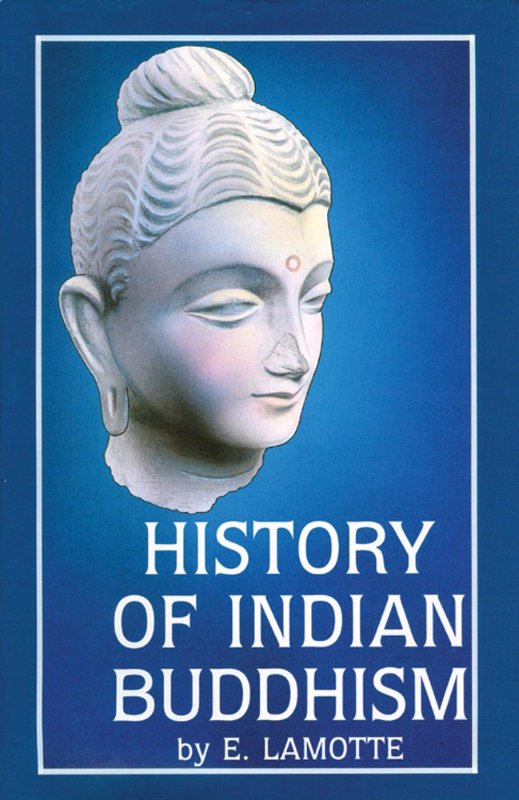
History of Indian Buddhism: From the Origins to the Śaka Era is structured as a large-scale historical, textual, and doctrinal study of Buddhism in India. The book is organized into seven major chapters, followed by appendices, bibliography, indexes, and supporting materials. Its scope extends from the historical background of ancient India and the life of the Buddha to the formation of Buddhist schools, the development of Abhidharma, the rise of Buddhist devotion, and the early conditions that prepared the emergence of Mahāyāna Buddhism.
Chapter One: India at the Time of the Buddha
The first chapter establishes the historical and cultural background of Buddhism’s emergence. It begins with historical and geographical data, including Vedic antecedents, the sixteen great countries of the sixth century B.C., the routes of communication, and the four kingdoms. The chapter then turns to the date and life of Śākyamuni, discussing the chronology of the Buddha and the main events of his life.
A major section is devoted to early Buddhist doctrine, including the Dharma and the Buddha, the discourse at Vārāṇasī, the truth of suffering, the origin and cessation of suffering, and the Middle Way. Lamotte also examines the Buddhist community, divided into two main sections: the monastic order and the lay fellowship. The monastic order is treated through topics such as the fourfold community, the duties of monks, disciplinary acts, the equipment and life of monks, and the ideal of the monk. The lay fellowship is discussed through the role of laypeople, their relationship with the Saṅgha, and their respective rights and religious responsibilities.
Chapter Two: The Magadhan Period
The second chapter studies Buddhism during the Magadhan period. It begins with historical facts, including Magadha from 546 to 324 B.C., Uttarāpatha, and Ceylon from 486 to 250 B.C. Lamotte then examines Buddhist legends and traditions, especially the councils of Rājagṛha and Vaiśālī, the early classification of the Buddhist scriptures, and the formation of the Tripiṭaka.
This chapter includes a detailed discussion of the canon of writings, beginning with the seven classifications of the scriptures and then the Tripiṭaka. Lamotte analyzes the Sūtrapiṭaka, Vinayapiṭaka, and Abhidharmapiṭaka, including questions of authenticity, arrangement, contents, and chronology. The chapter also discusses the disappearance of the Good Law, including Buddhist ideas concerning the decline of the Dharma and the succession of masters.
Chapter Three: The Mauryan Period
The third chapter focuses on the Mauryan period, one of the most important phases in the historical expansion of Buddhism. It begins with the Mauryan Empire, covering the succession of kings, Candragupta, Bindusāra, and especially Aśoka. Lamotte discusses Aśoka’s edicts, the extent of his empire, his Buddhist inscriptions, Buddhist sources concerning Aśoka, and the relationship between royal patronage and Buddhist expansion.
The second major section examines Buddhist legends and traditions of the Mauryan period. Topics include the third Buddhist council at Pāṭaliputra, the heresy of Mahādeva, the Mahāsāṃghika schism, and the growth of Buddhism in India. The chapter also discusses the Sinhalese chronicle tradition, including missions, Mahinda in Ceylon, and the spread of Buddhism beyond the Indian mainland. The section on archaeology covers stupas, caves, vihāras, and regional Buddhist sites in Mathurā, the North-West, Central India, the Eastern Coast, and Andhra.
Chapter Four: The Period of the Śuṅgas and Yavanas
The fourth chapter analyzes Buddhism during the period of the Śuṅgas and Yavanas. It opens with historical facts, including the Śuṅgas and Kāṇvas, Ceylon from 200 to 20 B.C., and the Bactrians and Indo-Greeks. Lamotte then studies Buddhism under the Śuṅgas, including the persecution attributed to Puṣyamitra, the Vīpuṣṭa danger, the great vihāras of the Śuṅga period, and the ancient Central Indian school of sculpture.
The chapter also gives special attention to Hellenism and Buddhism. It examines the influence of Buddhism on the Greeks and the Greek influence on Buddhism. Topics include the conversion of Menander, Greek religious background, the image of the Buddha, and the Mahāvastu of the Lokottaravādins. This chapter is significant because it situates Buddhist development within a larger intercultural environment involving India, Central Asia, and the Hellenistic world.
Chapter Five: The Period of the Śaka-Pahlavas
The fifth chapter studies the Śaka-Pahlava period. It begins with historical facts, including the Śaka-Pahlavas, the first Sātavāhanas, the Cedis of Kaliṅga, and Ceylon from 20 B.C. to 75 A.D. Lamotte then examines the Śaka-Pahlavas and Buddhism, including the relationship between political power, regional expansion, and Buddhist patronage.
A major section is devoted to the beginning of rock-cut architecture, especially in the Ajantā caves, Orissan caves, and early Buddhist cave establishments. Lamotte discusses the development of Buddhist monastic architecture, cave temples, inscriptions, and regional artistic traditions. This chapter is important for understanding how Buddhism became materially and institutionally embedded in the landscape through monasteries, caves, stupas, and inscriptions.
Chapter Six: The Buddhist Sects
The sixth chapter is one of the most important parts of the book for doctrinal and institutional history. It studies the origin and distribution of the Buddhist sects, including the nature of the sects, their geographical distribution, and traditional lists preserved in different sources. Lamotte compares the lists of the schools given by the Sinhalese tradition, Vasumitra, Bhavya, Śāriputraparipṛcchā, and other sources.
The chapter then turns to the achievements of the sects. It discusses the formation of Buddhist languages, including the Buddha’s language, the adoption of local dialects, the Theravādin position, Buddhist Sanskrit, and the language of different sectarian traditions. Another major section is devoted to progress in the Abhidharma, including the definition of dharmas, causality, series, and the doctrinal systems of different schools such as the Sarvāstivādins, Sautrāntikas, and other Abhidharma traditions. The chapter concludes by examining concessions to Mahāyāna aspirations, including the influence of dhāraṇīs, the Mahāsaṃghika background, Buddhology, the career of the Bodhisattva, and the beginnings of devotional and salvific tendencies.
Chapter Seven: The Buddhist Religion
The seventh chapter shifts from institutional and doctrinal history to the religious life of Buddhism. It begins with the stages traversed by the Good Law, including the action of Śākyamuni, the Magadhan period, Aśoka, the conversion of Ceylon, and the conversion of the subcontinent.
The next major section discusses the deified Buddha. Lamotte analyzes the God, the superior to the gods, the successive stages of the Buddha legend, biographies of the Buddha, miraculous birth narratives, the Buddha’s former lives, and the development of the Bodhisattva career. The chapter also studies the secondary forms of religion, including the gods of the Triple World, popular devotion, Buddhist holy places, cultic practices, and devotional developments.
This final chapter is especially important because it shows how Buddhism gradually developed from an early renunciant and doctrinal movement into a complex religious civilization with sacred geography, devotional practices, legendary narratives, Buddha veneration, and emerging Bodhisattva ideals.
Appendices and Supporting Materials
The book concludes with appendices, bibliography, indexes, and additional reference tools. These sections support the scholarly use of the work by providing references, names, technical terms, geographical data, and textual material. The supporting apparatus makes the book not only a historical narrative but also a reference work for advanced research in Buddhist Studies.