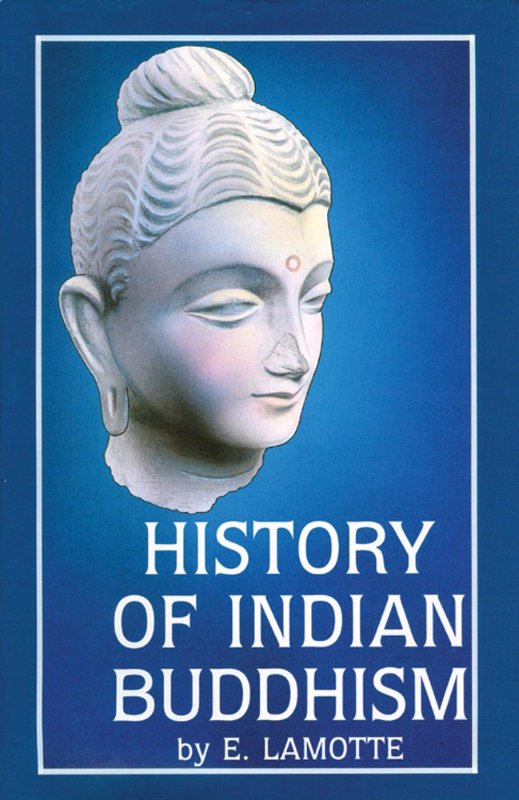
History of Indian Buddhism: From the Origins to the Śaka Era
Étienne Lamotte
History of Indian Buddhism: From the Origins to the Śaka Era by Étienne Lamotte is a monumental scholarly study of Indian Buddhism from its earliest formation to the Śaka period. The work traces the historical, doctrinal, institutional, and geographical development of Buddhism in India, beginning with the religious and social context of ancient India at the time of the Buddha. It examines the life of Śākyamuni, the early Buddhist doctrine, the structure of the monastic community, the role of the laity, and the formation of the Buddhist canon.
A major strength of the book lies in its broad methodological foundation. Lamotte draws upon Pāli, Sanskrit, Chinese, and Tibetan sources, as well as inscriptions, archaeology, chronicles, and sectarian traditions. The study gives significant attention to the Magadhan and Mauryan periods, especially the reign of Aśoka and the role of his edicts in the historical expansion of Buddhism. It also analyzes Buddhist councils, the emergence of the Tripiṭaka, the disappearance of the Good Law as imagined in Buddhist tradition, and the gradual development of Buddhist sects.
The later chapters examine the Śuṅga, Yavana, Śaka-Pahlava periods, the growth of Buddhist art and architecture, the linguistic traditions of Buddhist schools, Abhidharma developments, and early Mahāyāna tendencies. Overall, the book is an indispensable reference for the study of Indian Buddhist history, early Buddhist institutions, sectarian Buddhism, textual transmission, and the historical background of Mahāyāna Buddhism.