Giới thiệu
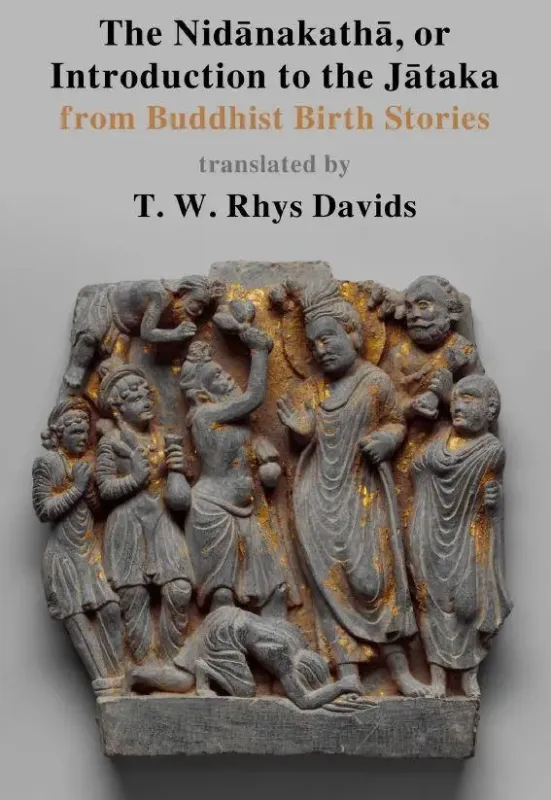
The volume opens with a Preface by Ānandajoti Bhikkhu, explaining that the present edition reproduces Rhys Davids’ study and translation of the Nidānakathā, the introduction to the Jātaka commentary. The editor notes that the edition is not a verbatim transcript of the 1880 publication: some spellings and Pāli forms have been regularized, such as replacing “Bodisat” with Bodhisatta, restoring diacritics, and updating certain Sanskrit/Pāli transliterations.
The Introduction discusses the Jātaka Book as one of the oldest and most significant collections of folklore, fables, moral tales, parables, riddles, and comic stories. Rhys Davids explains the traditional Buddhist belief that the Buddha used stories of his former births to illustrate moral and spiritual lessons. At the same time, he critically examines the historical reliability of this orthodox view, arguing that the development of the Jātaka collection must be studied through textual, historical, and comparative methods.
The introduction also includes several sample Jātaka stories to demonstrate their narrative style and ethical function. These include “The Ass in the Lion’s Skin”, “The Talkative Tortoise”, “The Jackal and the Crow”, “The Birth as Great Physician”, “Sakka’s Presents”, and “A Lesson for Kings.” These stories illustrate themes such as foolish pride, excessive speech, false praise, wisdom in judgment, magical objects, royal ethics, and the Buddhist principle of conquering anger by calmness and evil by goodness.
A major section, The Kalilag and Damnag Literature, examines the transmission of Indian narrative materials into Persian, Syriac, Arabic, Hebrew, Latin, Greek, Spanish, and later European languages. Rhys Davids connects the Jātaka tradition with the broader history of Indian fable literature, especially the Pañca Tantra and the Kalilah and Dimnah tradition.
Another important section, The Barlaam and Josaphat Literature, discusses the remarkable transformation of the Buddha’s life story into a Christian religious romance. Rhys Davids explains that the figure of Josaphat ultimately derives from the Bodhisatta/Buddha tradition, showing how Buddhist biography entered medieval Christian literature through complex channels of translation and adaptation.
The central textual section is The Nidānakathā, divided into three major epochs.
I. The Distant Epoch presents the remote beginnings of the Bodhisatta’s career. It explains the long process through which the future Buddha makes his aspiration for Buddhahood and begins the accumulation of perfections across countless lives. This section situates the Buddha’s final awakening within a vast karmic and cosmic horizon.
II. The Middle Epoch continues the Bodhisatta’s long career through repeated births and moral cultivation. Although the section is comparatively brief in the table of contents, it functions as a bridge between the remote aspiration and the final life of Gotama Buddha.
III. The Proximate or Last Epoch narrates the final life of the Bodhisatta. It includes key events associated with the Buddha biography: the Bodhisatta’s descent from Tusita, conception, birth, youth, renunciation, ascetic striving, defeat of Māra, awakening under the Bodhi tree, and the beginning of his teaching mission. This section is especially important for the study of how later Theravāda tradition shaped a full narrative biography of the Buddha before and around his enlightenment.
Overall, the work is valuable as both a translation of a major Pāli narrative source and a historical study of Buddhist storytelling. It demonstrates how Jātaka literature preserves Buddhist moral teaching, popular narrative traditions, folklore motifs, and early biographical imagination surrounding the Bodhisatta and the Buddha.