
Kho tài liệu Phật giáo
Kinh điển, luận giải, nghiên cứu Phật học — tải xuống miễn phí phục vụ tu học và nghiên cứu.
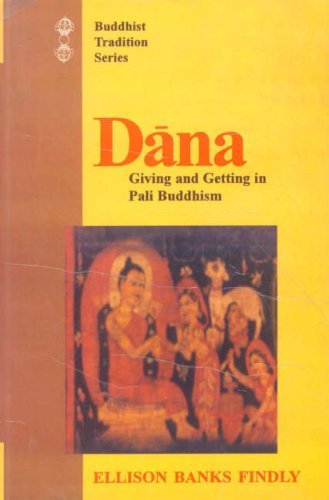
Dāna: Giving and Getting in Pāli Buddhism
Ellison Banks Findly
Dāna — Giving and Getting in Pāli Buddhism by Ellison Banks Findly is a scholarly monograph on the practice, theory, and social function of dāna in Pāli Buddhism. The book studies giving not only as an individual virtue, but also as a structural principle connecting the Saṅgha and the lay community. In early Buddhist teaching, dāna is presented as a foundational moral practice that weakens attachment, supports spiritual cultivation, and sustains the material life of the monastic order. According to the review, Findly examines dāna through Pāli canonical and related textual sources, paying close attention to the relationship between renunciants and donors. The Saṅgha depends on laypeople for the four requisites—food, robes, shelter, and medicine—while laypeople depend on the Saṅgha for religious guidance and the gift of Dhamma. The book therefore treats dāna as a reciprocal religious relationship, involving material support from lay followers and spiritual support from renunciants. The study covers Buddhist donation, the role of the householder, gifts to the renunciant community, the ethics of giving, the worthiness of recipients, merit-making, merit transfer, monastic property, monastic conduct, and Ānanda’s mediating role between donors and the Saṅgha. The reviewer concludes that the book is a valuable contribution to Buddhist Studies because of its close use of Pāli canonical and Sanskrit source materials.
Theories of the Gift in South Asia: Hindu, Buddhist, and Jain Reflections on Dāna
Maria Heim
Theories of the Gift in South Asia: Hindu, Buddhist, and Jain Reflections on Dāna by Maria Heim is a comparative scholarly study of gift-giving in premodern South Asian religious traditions. The book examines how Hindu Dharmaśāstra, Jain scholastic literature, and Theravāda Buddhist texts theorize dāna as an ethical, ritual, social, and religious act. Rather than treating gift-giving merely as charity or economic exchange, Heim analyzes it as a structured moral encounter involving four key elements: the donor, the recipient, the ritual procedure, and the gift itself. A major contribution of the book is its challenge to the dominant Maussian theory that gifts are primarily governed by reciprocity. Heim argues that South Asian theories of dāna often imagine the gift as asymmetrical and unreciprocated, especially when directed toward religious elites such as brahmans, monks, and nuns. The gift is not mainly about exchange, but about cultivating and expressing esteem, reverence, generosity, and moral refinement. The book is especially valuable for Buddhist Studies because it places Theravāda reflections on dāna in conversation with Hindu and Jain materials, showing both shared civilizational assumptions and distinct sectarian differences. It is an important work for understanding dāna as a moral practice, a ritualized social act, and a theoretical category in South Asian religious ethics.
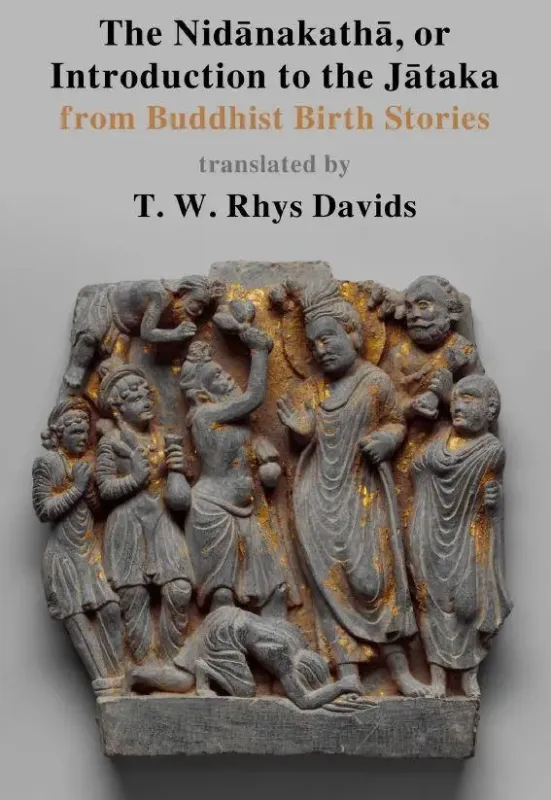
The Nidānakathā or Introduction to the Jātaka Stories From Buddhist Birth Stories or Jātaka Tales
T. W. Rhys Davids
The Nidānakathā, or Introduction to the Jātaka Stories is an English translation by T. W. Rhys Davids of the introductory narrative to the Jātaka commentary, originally published in Buddhist Birth Stories in 1880 and revised by Ānandajoti Bhikkhu in 2020. The work introduces the Jātaka tradition, a major body of Buddhist narrative literature that recounts the former lives of the Bodhisatta before his final birth as Gotama Buddha. The book presents the literary, historical, and comparative significance of the Jātakas. Rhys Davids discusses how these stories functioned as moral, didactic, and folkloric narratives within Buddhist tradition. He also compares Jātaka stories with Western fables, including parallels to Aesop, the Pañca Tantra, Kalilah and Dimnah, and the Barlaam and Josaphat tradition. The main narrative section, the Nidānakathā, describes the career of the Bodhisatta across three major epochs: the distant past, the middle period, and the final life leading to Buddhahood. It includes the Bodhisatta’s aspiration, perfections, descent from Tusita heaven, birth, renunciation, struggle for awakening, enlightenment, and early teaching career. As such, the text is important for the study of Buddhist biography, Jātaka literature, Buddhist moral imagination, and the transmission of Indian narrative traditions across Asia and Europe.
The Early Upaniṣads: Annotated Text and Translation
Patrick Olivelle
The Early Upaniṣads: Annotated Text and Translation by Patrick Olivelle is a major scholarly edition and translation of twelve early Upaniṣads, including the Bṛhadāraṇyaka, Chāndogya, Taittirīya, Aitareya, Kauṣītaki, Kena, Kaṭha, Īśā, Śvetāśvatara, Muṇḍaka, Praśna, and Māṇḍūkya Upaniṣads. The volume presents Sanskrit texts, English translations, annotations, variant readings, and scholarly notes. Olivelle approaches the Upaniṣads not as a single philosophical system, but as historically layered texts composed across several centuries in different social, ritual, and intellectual contexts. The book emphasizes the transition from Vedic ritualism to new religious and philosophical concerns, including karma, rebirth, liberation, ascetic discipline, meditation, ātman, brahman, and the search for ultimate reality. Olivelle’s translation aims to be accurate, readable, and historically grounded, avoiding sectarian or later theological interpretations. The work is therefore valuable both as a primary textual resource and as a research tool for the study of ancient Indian religion, early Hindu thought, Sanskrit literature, and the intellectual background of Buddhism and Jainism.